
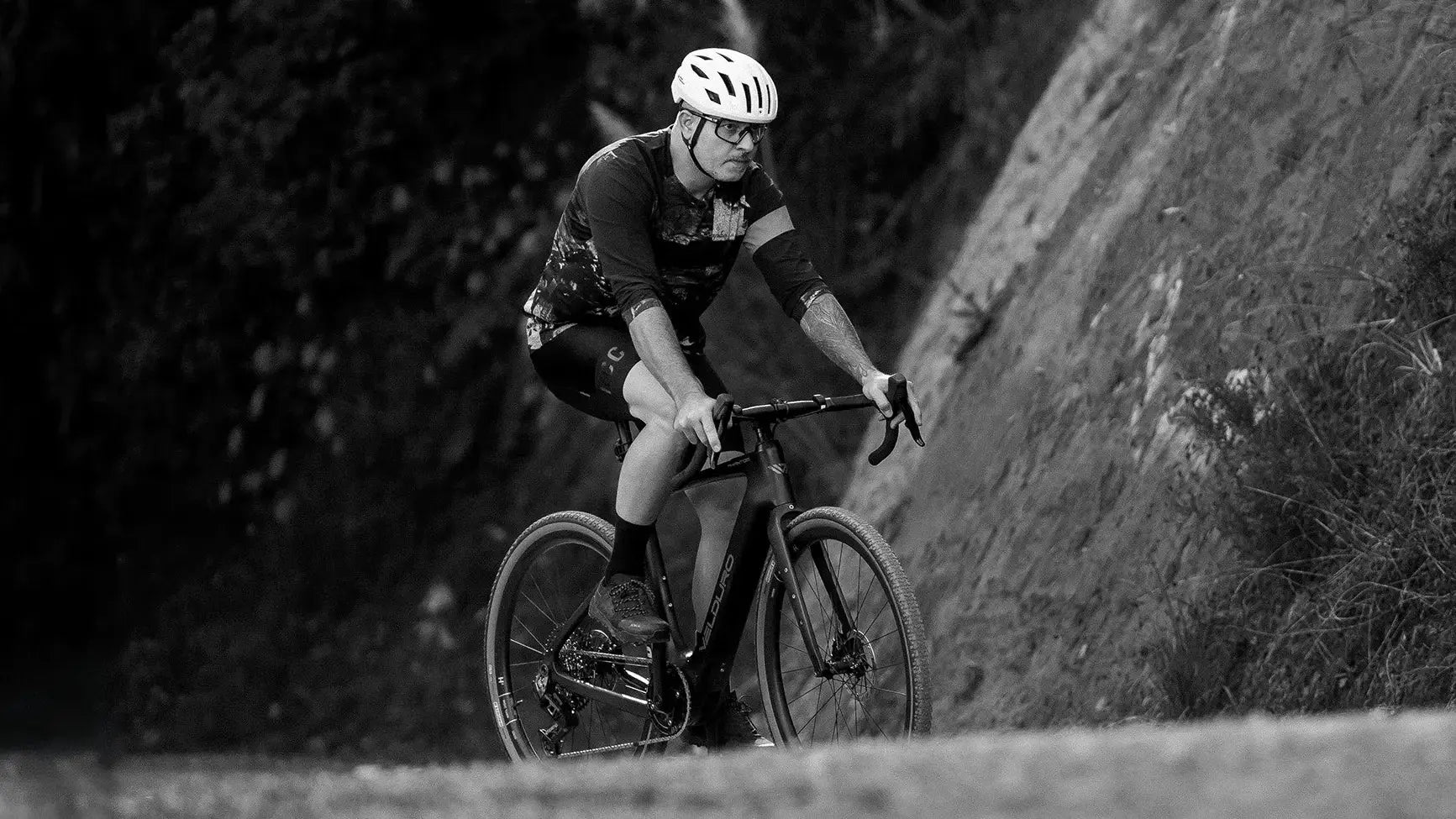


Towing a 17-foot canoe on the Velduro Phantom X
A 17-foot canoe is an odd thing to tow behind a gravel bike. So when Velo, one of the biggest names in cycling media, pitched us a three-day trip with a Phantom X doing the towing, we said yes before anyone could talk us out of it.
The plan was a loop from a house in Bellingham, Washington. Tow the canoe about 40 miles (65 km) out of town and up 2,500 feet (760 m) of climbing to a lake in the hills, then load the bikes and gear into the canoe and paddle roughly 40 miles back down the river toward the sea. No car, no shuttle, no going back for anything.
We handed the planning over to Logan Nelson and Andrew Ford, two friends who had never tried anything like it.
Building a trailer from Marketplace finds
Logan wanted the trip to be a real use of the bike, not a showpiece. “I wanted to push the ebike to its limit and use it in a way that lets me do something I couldn’t before,” he says.
The catch was that he had no way to tow a canoe, so he built a trailer. After a day of driving around yard sales and thrift stores for old bike parts, he found a Facebook Marketplace listing with what he needed. The seller had a child’s bike trailer that had sat unused for years, and its hitch already moved side to side, up and down and rotated. That saved Logan from designing a three-axis joint, and the canoe end now goes on in under 30 seconds.
How the Phantom X handled the load
The Phantom X is our e-gravel bike. It has an Avinox M2 drive with 120Nm of continuous torque, 125Nm on boost and 1,100W peak power, plus a 600Wh battery. The frame has mounting points for racks, mudguards, bottles and bikepacking bags.
Before the trip, Logan rode the bike unloaded and came away impressed. “It carries its extra weight well,” he says. “It doesn’t feel cumbersome and is impressively stable at speed.” He has ridden most of the e-bike motors on the market and says the Avinox M2 is his favourite.
With a canoe and three days of camping and camera gear behind him, he rode most of the first day in eco mode to save battery. That meant a lot of the pulling came from his own legs, somewhere between 180 and 250 watts, and he saved the higher power modes for the steep pitches. On a gravel road with the canoe in tow, he hit 28 mph. “It was fine,” he says.
Gravel climbs, a river camp and some rapids
The first day took them out of Bellingham and onto long gravel climbs toward the lake. The plan shifted when they found a closed gate near dark, so they camped beside the river instead. The next morning they left the canoe at the foot of the last steep section and rode up to the lake on the bikes alone.
Logan admits he isn’t a water person, and he’d only ever snorkelled in Hawaii. At the lake he put on a wetsuit and went in anyway.
Back at the river, they took the wheels off, packed both bikes into the canoe and pushed off into faster water than either of them expected. Whether they made it all the way to the bay is in the film.
Our mates at Aeroe, the New Zealand bikepacking specialists who put the Phantom through its own 170km overnight test, supplied the bags and mounts. Logan chose the dry-bag version of the saddle bag, and it earned its place when the rapids got serious. “Having these dry bags was kind of a lifesaver,” he says.
Watch the full film
Watch the video above, read Velo’s write-up, and see the Phantom collection to compare the S, R and X, plus the Frame Only option.


